
Is It Good to Sleep With a Red Light On All Night?

If you have searched for red light sleep, you may have wondered whether red light is actually better at bedtime and whether it is okay to leave a red light on while you sleep.
The short answer is a little more complicated than yes or no.
Research suggests that red light is generally less disruptive to the body's nighttime processes than blue-rich light, but darkness is still considered the ideal environment for sleep. The brightness of the light, how long you are exposed to it, and the type of light source all matter.
That distinction is also important to understanding Red Light Sleep and why its sleep videos are designed the way they are.
Red Light vs. Blue Light at Bedtime
Light is one of the signals the body uses to regulate its circadian rhythm, the internal clock involved in determining when we feel awake and when we become sleepy.
Blue-rich light can have a particularly strong effect on this system. Research has shown that nighttime light exposure can suppress melatonin, and newer research comparing red and blue LED light found blue light produced more sustained melatonin suppression than red light.
That doesn't mean red light magically creates sleep.
It means red light and blue light don't affect the body in exactly the same way.
This is one reason dim, warmer lighting is often preferred when preparing for bed.
So, Should You Leave Red Light On All Night?
If you're wondering whether it's good to sleep with red light on all night, the answer depends on how the light is being used. For sleep itself, a dark bedroom is generally considered best.
Red light may be less disruptive than blue or bright white light, but it is still light. A red light that is too bright may still affect sleep, and research into red light and sleep is continuing to develop.
For someone who can comfortably sleep in complete darkness, there is no need to add red light simply because it is red.
But real bedtime routines aren't always that simple.
Some babies, children and adults prefer a small amount of visual comfort while falling asleep. Some families use white noise throughout the night. Others may use a screen as part of an established bedtime routine.
When light is going to be present, reducing unnecessary brightness and stimulation becomes especially important.
Where Red Light Sleep Fits In
Red Light Sleep is not red light therapy.
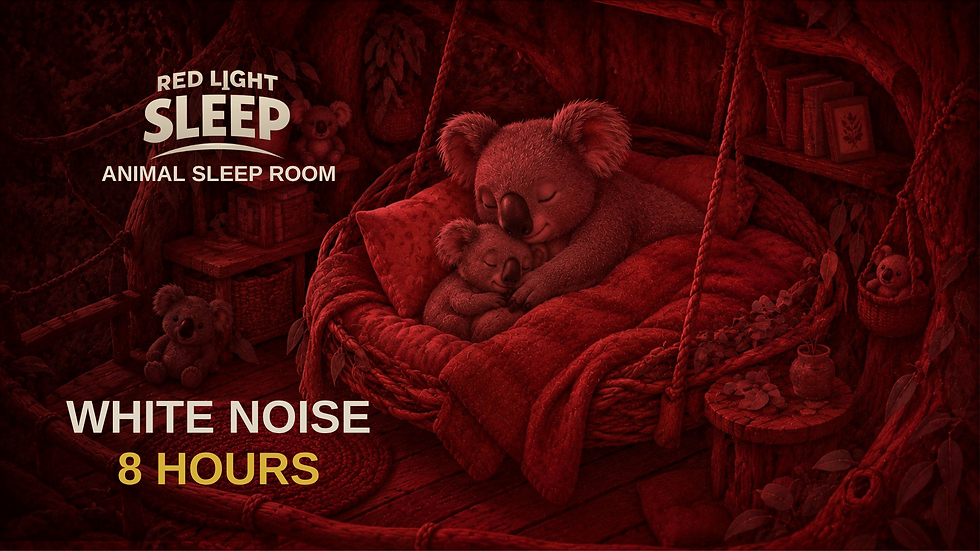
Red Light Sleep creates deep red sleep videos, calming bedtime animations and white noise designed for babies, children and adults.
The videos are intentionally different from ordinary television and online entertainment.
Instead of bright colors, flashing scenes, rapidly changing imagery or energetic music, Red Light Sleep uses:
Ultra-dim, deep-red visuals
Slow or nearly still bedtime scenes
Low-stimulation Sleep Rooms
Continuous white noise
Long-form 3-hour and 8-hour options
The goal isn't to claim that watching a red screen is better than complete darkness.
It's to create a calmer alternative when a family chooses to use a screen or sleep video as part of bedtime.
Why Are Some Red Light Sleep Videos 8 Hours Long?
An 8-hour Red Light Sleep video doesn't mean everyone should watch red light for eight hours.
The longer format gives families flexibility.
Some may use a Sleep Room only while a child settles down. Others may want continuous white noise throughout the night without having to restart a video after three hours.
That's also why Red Light Sleep keeps the visuals deliberately dark and consistent rather than creating an eight-hour traditional children's video.
Parents and adults can choose how long the visual portion remains part of their own bedtime environment.
Is Red Light Better Than Blue Light for Sleep?
When comparing nighttime light colors, dim red light appears to interfere less with melatonin and circadian signaling than blue-rich light.
But color isn't the only consideration.
A very bright red light isn't automatically ideal simply because it's red. Intensity, duration, timing and individual sensitivity matter too.
And when it comes to sleeping through the night, darkness remains the simplest standard.
The Red Light Sleep Approach
Red Light Sleep was created around a simple idea: bedtime content should feel like bedtime.
That means darker visuals instead of bright entertainment, steady sound instead of changing music, and peaceful environments instead of constant stimulation.
Red Light Sleep isn't designed to replace healthy sleep habits or complete darkness.
It's designed to give families and adults who already use sleep videos another option — one intentionally created for winding down.
Explore Red Light Sleep Sleep Rooms on YouTube to find deep-red bedtime environments with continuous white noise for babies, kids and adults.

This article is for general educational purposes and is not medical advice.


Comments